
When people think about what makes a city globally competitive, they often think first about its companies, universities, ports, talent or quality of life.
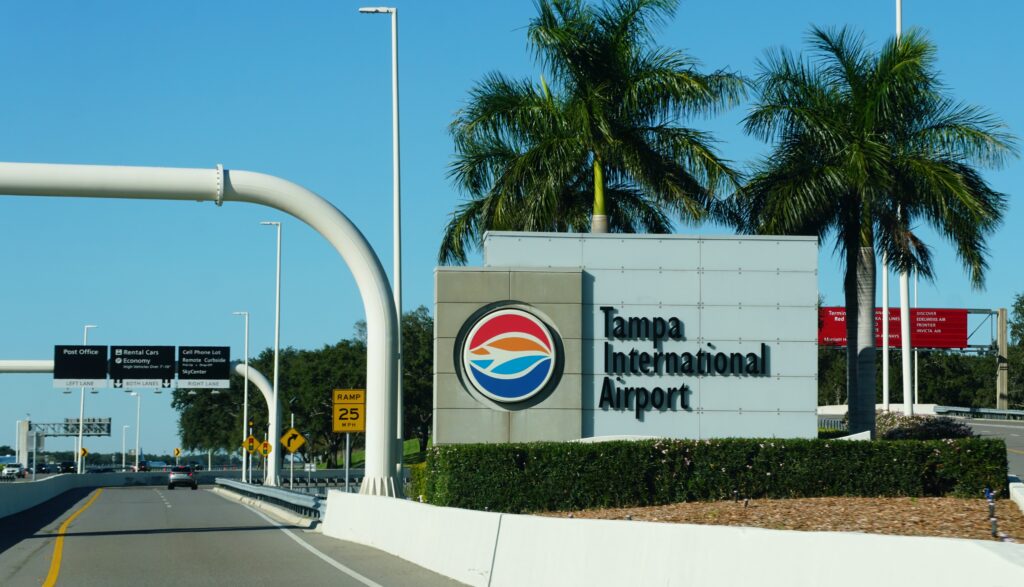
But one of Tampa Bay’s most important global assets is the place that connects all of them to the rest of the world: Tampa International Airport.
TPA’s value goes far beyond passenger convenience. A world-class international airport expands the region’s economic reach, supports trade and investment, strengthens tourism, facilitates academic and diplomatic exchange, and makes Tampa more accessible to businesses and institutions around the world.
That is why TPA’s latest recognition matters.
Tampa International Airport was recently named #1 in Customer Satisfaction among Large Airports in the 2026 J.D. Power North America Airport Satisfaction Study, marking the third time TPA has earned the top ranking.
The award reinforces something Tampa Bay already knows: TPA is not simply an airport serving the region. It is part of the infrastructure that allows Tampa to function as an international city.
A gateway to global markets
International connectivity changes what is possible for a region.
For Tampa Bay companies, nonstop international flights make it easier to meet customers, suppliers and partners overseas. For international companies, they make Tampa a more practical location for U.S. operations, investment and expansion.
For universities and research institutions, connectivity supports international collaboration and student exchange. For tourism and hospitality, it opens Tampa Bay to new visitor markets. And for government, diplomacy and civic organizations, it makes international relationships easier to establish and sustain.
Every international route effectively shortens the distance between Tampa and another market.
That matters when cities are competing globally for capital, talent, companies, visitors and ideas.
Airports influence investment decisions
When companies consider entering a new market or establishing an office, accessibility matters.
Executives need to know whether they can reach customers, headquarters and international partners efficiently. Investors and site selectors consider how easily people can move in and out of a region. International companies want confidence that their employees and leadership teams can remain connected to the rest of the world.
A strong international airport therefore becomes part of a region’s economic development proposition.
Tampa International Airport helps answer an important question for companies evaluating Tampa:
Can we do global business from here?
Increasingly, the answer is yes.
Part of Tampa Bay’s larger global ecosystem
TPA becomes even more significant when viewed alongside Tampa Bay’s other international assets.
The region is home to Port Tampa Bay, major universities and research institutions, MacDill Air Force Base, a growing technology and entrepreneurial ecosystem, international businesses, a strong tourism economy and an increasingly diverse population with connections around the world.
These assets reinforce one another.
A company attracted by Tampa’s business environment benefits from international air service. A university forming an overseas research partnership depends on connectivity. International delegations considering investment opportunities need convenient access to the region. Tourism growth can help support additional international routes, which in turn make Tampa more attractive to businesses.
The result is an ecosystem in which connectivity creates additional connectivity.
The front door to an international city
TPA also plays another role that is easy to overlook: for many visitors, it is their first experience of Tampa.
An airport shapes perceptions immediately.
A confusing or outdated airport can create friction before a visitor ever reaches the city. A modern, efficient and welcoming airport communicates something very different.
TPA’s continued recognition for customer satisfaction strengthens Tampa’s reputation before an international executive, investor, researcher, diplomat or visitor ever reaches downtown.
It is Tampa’s front door to the world.
Building for the next stage of Tampa’s growth
Tampa’s international ambitions continue to expand, and TPA is preparing for that growth.
The airport serves more than 24 million passengers annually and is developing the new Airside D, a major expansion that will add international capacity, gates, passenger amenities and a new U.S. Customs inspection facility.
That investment matters because international connectivity is not static.
Cities that want to compete globally have to continually improve the infrastructure that connects them to global markets.
A global asset worth recognizing
The Tampa International Diplomacy & Exchange Summit (TIDES) is built around a simple idea: Tampa Bay already possesses many of the assets necessary to compete as a major international region.
The opportunity is to connect them, strengthen them and make them more visible to the world.
Tampa International Airport is one of the clearest examples.
Its international routes connect Tampa with markets overseas. Its passenger experience strengthens the region’s reputation. Its expansion creates capacity for future growth. And its presence makes nearly every other international asset in Tampa Bay more valuable.
A great airport does more than move people.
It expands the reach of an entire region.
For Tampa Bay, TPA is not simply where international journeys begin and end.
It is one of the assets that makes Tampa a global city.
Photo Credit: Khairil / stock.adobe.com