
Tampa’s waterfront has always connected the city to the world. Long before Tampa became known for its airports, universities, technology ecosystem, and international business ambitions, the city’s growth was shaped by what moved across the water: people, goods, ideas, and opportunity.
That is why the recently announced partnership between HD Hyundai and Tampa Ship deserves to be seen as more than a shipbuilding story. It is also a story about international collaboration, economic renewal, and Tampa’s ability to connect its history to its future.
HD Hyundai, one of the world’s leading shipbuilders, has entered into a strategic collaboration with Tampa Ship, part of the Edison Chouest Offshore family of companies, to build medium-sized LNG dual-fuel containerships in Tampa. The first deliveries are targeted for 2028, with HD Hyundai supporting vessel design, procurement, shipbuilding technology, technical infrastructure, and some ship-block fabrication.
At first glance, this may appear to be a business agreement between two companies. But viewed through Tampa’s broader international story, it represents something larger: a global partnership helping renew an industry with deep local roots.
Tampa’s maritime past is part of its civic identity
Tampa’s identity has always been tied to trade and transportation. Its port, shipyards, rail lines, cigar factories, and immigrant communities helped shape the city into a place where local ambition and international connection often moved together.
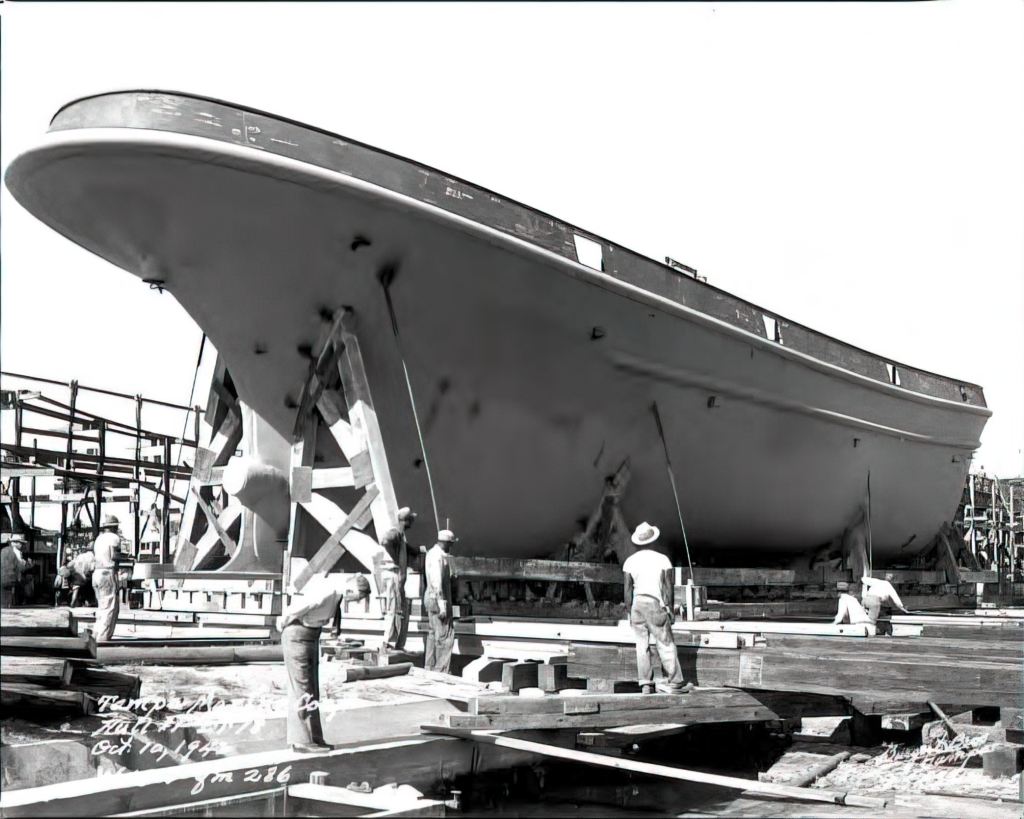
Shipbuilding and ship repair are part of that history. During World War II, Matthew McCloskey developed a shipyard at Hookers Point in Tampa on land owned by the Tampa Port Authority. The yard was built to support wartime ship production, including concrete ships at a time when steel was in high demand.
That history matters because it reminds us that Tampa has never been only a consumer of global commerce. At key moments, Tampa has also been a builder, producer, repairer, and strategic contributor to national and international needs.
Today’s Tampa Ship continues that working-waterfront legacy. The company describes itself as a full-service shipyard specializing in conversions, repair, and overhaul for vessels including container ships, tankers, cargo vessels, offshore supply vessels, cruise ships, LPG and LNG carriers, and more. It also notes that it is the only commercial shipyard between Pascagoula, Mississippi, and Hampton Roads, Virginia with four large graving docks and extensive crane capabilities.
In other words, the foundation for this opportunity did not appear overnight. Tampa already had the infrastructure, maritime location, technical experience, and industrial memory. What the HD Hyundai partnership adds is international expertise and a pathway toward modern vessel construction at a time when the United States is rethinking its maritime capacity.
International collaboration can renew local industry
The most important lesson from this partnership is that international relationships are not abstract. They can produce practical local outcomes.
A Korean shipbuilding leader is bringing technology, design knowledge, procurement experience, and production expertise to a Tampa-based shipyard. Tampa Ship brings location, infrastructure, skilled labor potential, and a Gulf Coast industrial platform. Together, they are responding to a national need while creating a local opportunity.
That is the kind of collaboration Tampa should be paying attention to.
Too often, international engagement is reduced to ceremonial visits, flag exchanges, trade receptions, or cultural performances. Those things matter because they build trust and familiarity. But the long-term value of international relationships is revealed when they lead to deeper partnerships: business investment, workforce development, technology transfer, educational exchange, and shared problem-solving.
The HD Hyundai–Tampa Ship partnership shows what that can look like. It connects global expertise to local capacity. It brings international innovation into a historic Tampa industry. It creates the possibility of new jobs, new training needs, new supplier relationships, and renewed attention to Tampa’s working waterfront.
That is diplomacy with a practical outcome.
A local story with national significance
This partnership also arrives at a moment when shipbuilding has become part of a larger national conversation. The United States is confronting serious questions about maritime capacity, supply chains, naval readiness, commercial shipping, and the industrial base needed to support national security and economic resilience.
A recent column arguing for a Gulf Coast shipbuilding renaissance noted that Florida and the broader Gulf Coast are well-positioned to help answer that challenge. The authors pointed to Florida’s ports, military infrastructure, research universities, manufacturing growth, and private capital as assets that could support a broader maritime revival. They specifically identified the Tampa Bay region’s connection to U.S. Central Command, Special Operations Command, advanced manufacturing, and maritime industrial-base investment.
Tampa does not need to claim that it will become the nation’s dominant shipbuilding center. That would be premature. But it can credibly say that it has a role to play.
That role may include specialized vessel construction, ship repair, conversion, advanced manufacturing, workforce development, supply-chain support, and collaboration with Gulf Coast shipbuilding assets in places such as Pascagoula, Mobile, and Louisiana. It may also include partnerships with universities, technical colleges, defense innovators, port operators, and international companies that see Tampa as a place where maritime industry can grow.
The key is not to view this as a single announcement. The key is to view it as a signal.
Why this matters for Tampa’s international future
For Tampa, the broader message is clear: international collaboration can help cities renew industries, not just celebrate relationships.
This is especially important as Tampa continues to define itself as an international city. Global identity is not built only through direct flights, tourism campaigns, visiting delegations, or sister city agreements. Those are important pieces of the puzzle, but they are not the whole picture.
A truly international city is one where global relationships create local capacity.
That means helping local companies reach foreign markets. It means welcoming foreign investment that strengthens the community. It means connecting students to international careers. It means turning cultural relationships into educational, economic, and civic partnerships. It means understanding that diplomacy, trade, innovation, and workforce development are deeply connected.
The HD Hyundai–Tampa Ship partnership fits squarely within that vision. It is a reminder that international engagement can be a tool for industry renewal. It shows how a city’s past can become relevant again when paired with the right global partner and the right economic moment.
The TIDES connection
This is exactly the kind of story that the Tampa International Diplomacy and Exchange Summit, or TIDES, should elevate.
TIDES is built around the idea that Tampa’s international future sits at the intersection of trade, innovation, diplomacy, education, and sustainability. A modern shipbuilding partnership touches all five.
It is about trade because vessels move goods and connect markets.
It is about innovation because modern shipbuilding depends on advanced design, cleaner fuel systems, digital tools, and technical expertise.
It is about diplomacy because trust between countries, companies, and communities makes collaboration possible.
It is about education because renewed industry requires welders, engineers, project managers, logistics professionals, and skilled technical workers.
And it is about sustainability because LNG dual-fuel vessels reflect the shipping industry’s ongoing transition toward cleaner and more flexible fuel technologies.
This is not a side story to Tampa’s international ambitions. It is a case study.
Building the future from the waterfront
Tampa’s history has always been shaped by its ability to connect with the world. The city grew because it welcomed people, moved goods, built industries, and adapted to changing economic realities.
Now, as Tampa looks toward its next chapter, the waterfront may once again become a place where history and future meet.
The HD Hyundai–Tampa Ship partnership is not just about ships. It is about what happens when global expertise meets local capacity. It is about how international collaboration can renew a legacy industry. It is about how Tampa can participate in a larger national effort while creating opportunities at home.
Most of all, it is a reminder that diplomacy is not only practiced in capitals. It is also practiced in cities, ports, shipyards, classrooms, boardrooms, and workshops.
When international relationships are built with purpose, they can do more than create goodwill.
They can build things.
-

-

-
 September 21, 2026