
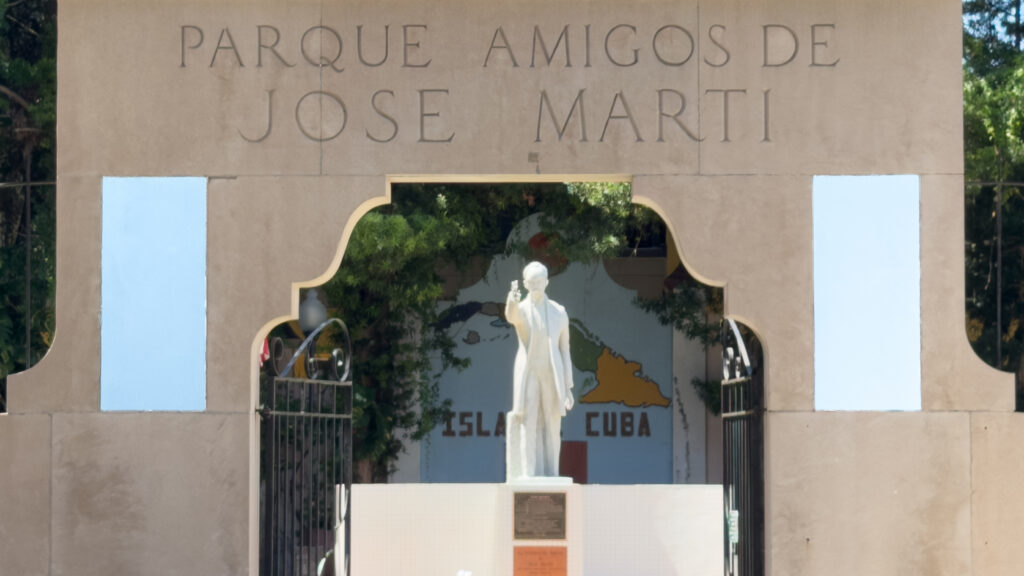
Long before Tampa described itself as a global city, the world was already gathering in Ybor City.
In the late nineteenth and early twentieth centuries, Ybor City was more than a cigar-manufacturing district. It was a crossroads of immigrants, workers, entrepreneurs, revolutionaries, writers, organizers, and dreamers. Its factories produced cigars, but they also produced ideas. On the factory floors, in mutual aid societies, in cafés, in social clubs, and in the streets, people debated the future of nations, the dignity of labor, and the meaning of freedom.
That history matters because it shows that Tampa’s international identity did not begin with modern trade missions, airport routes, or global conferences. It began with people. It began with immigrants who brought their languages, traditions, political struggles, and ambitions to a small Gulf Coast city and transformed it into a place connected to movements far beyond Florida.
A Cigar City Built by the World
Ybor City grew from the cigar industry, but the cigar industry itself was deeply international. Vicente Martínez Ybor, a Spanish-born cigar manufacturer who had built his business in Cuba and later Key West, helped establish the district in Tampa in the 1880s. He was joined by other cigar manufacturers who saw Tampa as a place where they could build factories, house workers, and connect to rail and port networks.
The workers who followed came from Cuba, Spain, Italy, and other places. They brought with them not only the skills required to hand-roll fine cigars, but also the traditions of their homelands. They built families, businesses, churches, mutual aid societies (such as Centro Asturiano de Tampa and L’Unione Italiana), newspapers (La Gaceta, La Contienda, La Prensa), and political organizations. The result was one of the most distinctive immigrant communities in the United States.
Ybor City became a place where the boundaries between local and international life were never cleanly separated. A worker might roll cigars in Tampa during the day, attend a meeting about Cuban independence at night, read Spanish-language newspapers in the morning, and send money to support political causes overseas. The neighborhood was local in geography, but global in identity.
José Martí and Tampa’s Role in Cuban Independence
No figure better represents Ybor City’s international political significance than José Martí.
Martí, the Cuban poet, journalist, intellectual, and revolutionary leader, understood the importance of Tampa’s cigar workers. He visited the city repeatedly in the 1890s, speaking to Cuban workers and rallying support for the cause of Cuban independence from Spain. For Martí, Tampa was not simply a place to raise money. It was a place to build unity, purpose, and political momentum.
The cigar workers of Ybor City helped fund and sustain the independence movement. Their contributions were not symbolic. They gave from their wages, organized through clubs and societies, attended speeches, circulated newspapers, and kept the dream of Cuban independence alive from American soil. In this way, Tampa became part of the geography of Cuban liberation.
That story complicates the way we often think about diplomacy. Diplomacy is usually imagined as the work of presidents, ambassadors, consulates, and formal institutions. But Ybor City reminds us that international movements are also shaped by workers, immigrants, writers, small business owners, and community organizers. People-to-people diplomacy was not a slogan in Ybor City. It was daily life.
The Factory Floor as a Political Classroom
One of the most remarkable traditions of the cigar factories was the lector.
In many factories, workers paid for a reader to sit on an elevated platform and read aloud while they worked. The lector might read novels, newspapers, political essays, labor writings, or revolutionary texts. In an era before radio, television, and social media, the lector turned the factory floor into a shared classroom.
This practice helped make cigar workers unusually informed and politically engaged. They listened together. They debated together. They interpreted world events together. The cigar factory became a place where labor, literacy, culture, and politics intersected.
That tradition is essential to understanding Ybor City. The factories were not silent industrial spaces. They were places where ideas moved alongside tobacco leaves and cigar boxes. Workers heard about events in Cuba, Spain, Latin America, Europe, and the United States. They discussed labor rights, colonialism, democracy, socialism, anarchism, nationalism, and freedom.
Ybor City’s cigar factories remind us that global awareness does not require a passport. Sometimes it begins in the workplace, when people are connected to the struggles and aspirations of others across borders.
Immigrant Labor and the Politics of Dignity
Ybor City’s history is also a labor story.
The cigar industry depended on skilled workers. Many were proud artisans who understood the value of their craft. They organized, struck, negotiated, and demanded respect. Labor disputes in Ybor City were not isolated workplace conflicts. They were part of larger international debates over class, power, immigration, and industrial capitalism.
Immigrant workers in Ybor City often lived in a world of competing pressures. They were building new lives in the United States while staying connected to political struggles abroad. They were contributing to Tampa’s economy while fighting for fair treatment in the workplace. They were preserving cultural traditions while adapting to a changing city.
This is one of the reasons Ybor City became such a powerful symbol. It was not merely picturesque. It was politically alive. Its social clubs, mutual aid societies, and worker organizations gave immigrants tools to care for one another, preserve identity, and participate in civic life. These institutions offered health care, education, social support, cultural programming, and political space.
In modern language, we might call this civic infrastructure. In Ybor City, it was survival, solidarity, and community.
Tampa and International Movements Beyond Cuba
While Cuban independence is central to Ybor City’s story, it is not the only international movement connected to the neighborhood.
Ybor City’s immigrant communities followed and participated in political developments across the Atlantic and throughout the Americas. Spanish immigrants debated the future of Spain. Italian immigrants brought their own political traditions and labor perspectives. Later, Ybor City would also be connected to anti-fascist organizing, especially during the Spanish Civil War era, when global political conflicts were felt deeply in immigrant communities across the United States.
This made Ybor City a place where international politics became local politics. Events in Havana, Madrid, Rome, and other cities were discussed in Tampa’s cafés, clubs, and homes. The people of Ybor City did not see themselves as isolated from the world. They were part of it.
That is one of Tampa’s oldest global lessons: international affairs are not distant abstractions. They are carried by people. They arrive through migration, commerce, culture, language, food, music, newspapers, churches, unions, and family networks.
Why This History Matters Now
Ybor City’s cigar factories belong to history, but the questions they raise are still relevant.
How do cities become global? How do immigrant communities shape civic identity? How do cultural ties become political ties? How do workers, students, artists, entrepreneurs, and community leaders influence international relationships? How do local institutions support global understanding?
These are not new questions for Tampa. Ybor City was answering them more than a century ago.
Today, Tampa’s international identity is often discussed through the language of trade, innovation, tourism, universities, military strategy, foreign investment, and global connectivity. Those are all important. But they are part of a longer story. Tampa’s global future is strongest when it remembers that its international roots were built by people who crossed borders, built communities, organized for change, and kept their eyes on the world.
Ybor City shows that Tampa has never been merely a local city. It has been a meeting place of cultures, causes, and countries. It has been a place where global events were debated on street corners, where workers helped fund a revolution, where literature and politics filled factory floors, and where immigrant communities helped define the character of the city.
As Tampa continues to grow as an international center, Ybor City offers both a legacy and a challenge. The legacy is clear: Tampa’s global identity is real, deep, and historic. The challenge is to build on that legacy with intention.
The next chapter of Tampa’s international story should honor the spirit of Ybor City: people connected across borders, cultures learning from one another, and local action shaping global relationships.
That was Ybor City then.
It can be Tampa’s future now.
Works Cited
“Cradle of Cuban Liberty.” The Historical Marker Database, www.hmdb.org/m.asp?m=15157. Accessed 5 June 2026.
“Ybor Cigar Factory.” Tampa Historical, University of South Florida, tampahistorical.org/items/show/126. Accessed 5 June 2026.
“Ybor City: Cigar Capital of the World.” National Park Service, U.S. Department of the Interior, www.nps.gov/articles/000/ybor-city-cigar-capital-of-the-world-teaching-with-historic-places.htm. Accessed 5 June 2026.
“Ybor City Historic District, Tampa, FL.” National Park Service, U.S. Department of the Interior, www.nps.gov/places/ybor-city-historic-district-tampa-fl.htm. Accessed 5 June 2026.
“El Liceo Cubano Building at 1300 7th Ave. in Ybor City.” Florida Memory, State Library and Archives of Florida, www.floridamemory.com/items/show/317714. Accessed 5 June 2026.
Tampa Sister Cities Committee, Inc. Amended and Restated Bylaws. Tampa Sister Cities Committee, Inc., 20 Feb. 2023.
-

-
-
 September 21, 2026