Today, when people think of Florida’s international identity, they often think of Miami. That reputation is well earned. Miami has become one of the world’s great gateways to Latin America and the Caribbean — a global city shaped by migration, finance, tourism, media, culture, and trade.
But Florida’s international story is much older and much broader than any one city.
St. Augustine, founded by Spain in 1565, is the oldest continuously occupied European and African American settlement in the United States. It served as a military, administrative, and religious center of Spanish Florida and was shaped by centuries of colonial rivalry and Atlantic-world history. Pensacola also has deep Spanish colonial roots, including the Tristán de Luna settlement of 1559–1561, identified by the University of West Florida as the earliest multi-year European colonial settlement archaeologically documented in the United States.
Tampa’s claim is different.
Tampa was not Florida’s first international city in the colonial sense. Instead, Tampa became one of Florida’s earliest modern international cities — a late 19th- and early 20th-century gateway shaped by railroads, steamships, port commerce, cigar manufacturing, immigration, labor, culture, and political movements connected to Cuba, Spain, Italy, and the wider Caribbean.
That is the story TIDES can help Tampa tell.
Tampa’s International Story Begins With Connection
In the early 1880s, Tampa was still a small and relatively isolated Gulf Coast town. Its transformation came through transportation.
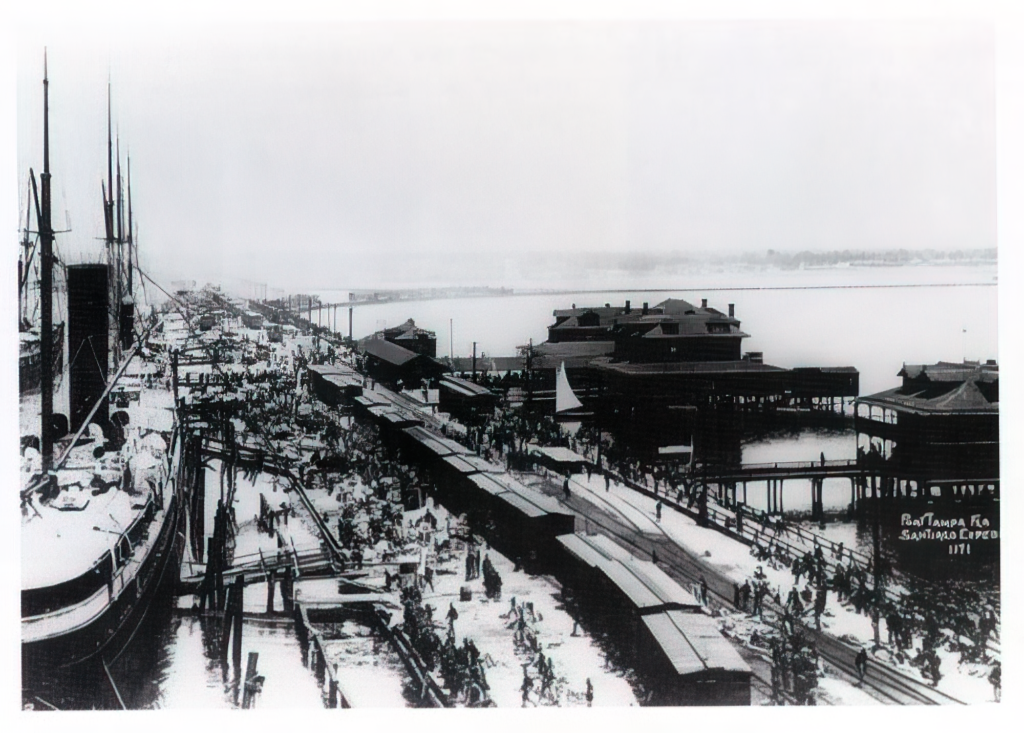
Henry B. Plant’s railroad and steamship system changed Tampa’s place in the world. In 1885, the Plant Steamship Line began running between Port Tampa, Key West, and Havana. In 1886, Plant obtained the U.S. mail contract for the Key West and Havana routes.
That was more than transportation infrastructure. It was international infrastructure.
Rail lines brought people, products, capital, and ideas into Tampa. Steamship routes connected Tampa to Cuba and the Caribbean. Port activity turned the city into a place where goods, workers, entrepreneurs, soldiers, immigrants, and political movements could move across borders.
International cities are not created by geography alone. They are created by connections.
By the late 19th century, Tampa was no longer simply a small town on Florida’s west coast. It was becoming a gateway — a place where the United States, Cuba, the Caribbean, and Europe met through commerce, migration, culture, industry, and politics.
Ybor City: The International City Within Tampa
The arrival of Vicente Martinez Ybor made Tampa’s international identity unmistakable.
Ybor, a Spanish-born cigar manufacturer who had operated in Cuba and Key West, chose Tampa as the site for a new cigar-manufacturing community in the 1880s. That decision changed the future of the city.
The City of Tampa notes that Ybor City was founded in 1886 and became the “cigar capital of the world” by 1900. Its factories were worked mostly by Cuban cigar makers, along with Italians and Spaniards. The National Park Service describes Ybor City’s character as being defined by a blend of European, Asian, and Cuban immigrants who settled there to support the region’s cigar industry.
But Ybor City was more than an industrial district. It was an international city within a city.
Cuban cigar workers, Spanish merchants, Italian families, Afro-Cuban residents, Jewish business owners, German lithographers, and immigrants from across Europe and the Caribbean helped build a community unlike almost anywhere else in Florida. Its streets carried multiple languages. Its factories connected Tampa to global tobacco markets. Its social clubs preserved culture, language, food, music, theater, mutual aid, and civic life.
This is what made Tampa different.
Ybor City was not simply a neighborhood of immigrants. It was a working international ecosystem. It linked Tampa to Cuba, Spain, Italy, Germany, and beyond. It created a local economy with global roots and a civic culture shaped by people who crossed borders physically, economically, politically, and culturally.
By 1900, Tampa was not just producing cigars. It was exporting a global identity.
Tampa and the Fight for Cuban Independence
The cigar industry gave Tampa international commerce, but the people of Ybor City gave Tampa international purpose.
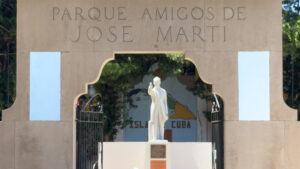
Tampa was deeply connected to Cuban independence. José Martí visited Tampa repeatedly, speaking to Cuban communities and cigar workers who helped raise money, awareness, and support for the cause of Cuban liberation. Tampa Historical describes Ybor City as a place sometimes called the “Cradle of Cuban Liberty,” tied to Martí, cigar workers, and the organizing that helped support the Cuban independence movement.
One of Tampa’s most famous stories from this period is the “Cigar of Liberty.” As the story goes, Martí sent instructions related to the Cuban uprising hidden inside a cigar, using Tampa’s cigar community as part of the revolutionary communication network. Local histories treat the episode as a powerful story of Tampa’s role in Cuban independence, even while the details are often told with the texture of legend.
Whether understood as history, legend, or a combination of both, the story captures something true about Tampa: this was a city where international politics moved through ordinary people, workplaces, newspapers, clubs, and community relationships.
Tampa was not merely watching events abroad. Tampa was connected to them.
The Spanish-American War Made Tampa a National Stage
In 1898, Tampa’s international role became visible to the entire country.
During the Spanish-American War, Tampa served as a major port of embarkation for U.S. troops heading to Cuba. A Tampa historical marker notes that from April to June 1898, Tampa was the port of embarkation for U.S. troops bound for Cuba. USF Special Collections describes Tampa as a primary embarkation center during the war and notes that approximately 30,000 troops passed through Tampa on the way to Cuba, including Theodore Roosevelt and the Rough Riders.
The war brought soldiers, journalists, politicians, military planners, and national attention to Tampa. Hotels filled. Streets crowded. Rail and port infrastructure became part of a geopolitical moment. Tampa’s relationship with Cuba was no longer only commercial and cultural; it was strategic.
This moment reinforced Tampa’s identity as a city linked to the Caribbean, to military movement, to international conflict, and to the future of U.S. relations with Latin America.
Ybor City and the Anti-Fascist Women’s March
Tampa’s international consciousness did not end with Cuba.
In 1937, Ybor City became the site of one of the most remarkable political demonstrations in Florida history: the Antifascist Women’s March against Francisco Franco and fascism during the Spanish Civil War.
Hillsborough County’s historical marker program describes the 1937 march and notes that Ybor remained dedicated to the anti-fascist cause, with 24 men from Ybor City joining the Abraham Lincoln Brigade to fight against Franco’s forces. Other accounts describe thousands of women, many of them working-class Latinas, marching through Ybor City in protest of fascist violence abroad.
This event matters because it shows Tampa’s international identity was not limited to trade or immigration. People in Ybor City saw themselves as connected to struggles across the Atlantic. Spain’s Civil War was not an abstract foreign conflict to them. It was personal, cultural, political, and moral.
Again, Tampa was practicing people-to-people international engagement long before that language became common.
Tampa in Florida’s International Story
Miami’s later rise as a global city is an important part of Florida’s story. The City of Miami notes that Miami was incorporated in 1896 with 444 citizens, after Henry Flagler helped finance streets, water and power systems, and a resort hotel. Over time, Miami became one of the hemisphere’s most important gateways to Latin America and the Caribbean.
Tampa’s story is not a rival story. It is an earlier and different chapter.
By the time Miami was incorporated, Tampa had already built steamship links to Havana, founded Ybor City, attracted Cuban, Spanish, Italian, and other immigrant communities, and become a center of cigar manufacturing and Cuban independence activity. Tampa’s international identity was industrial, maritime, immigrant-driven, and civic.
Florida has many international origin stories.
St. Augustine tells the story of Spanish empire, colonial settlement, religion, military power, and Atlantic history.
Pensacola tells the story of early European settlement attempts, imperial rivalry, Gulf Coast strategy, and Spanish, French, British, and American influence.
Key West and Amelia Island tell stories of maritime trade, contested borders, Caribbean proximity, and changing flags.
Miami tells the story of a modern hemispheric gateway whose global identity grew dramatically in the 20th century.
Tampa tells another essential story: the story of a modern international city built through industry, immigration, ports, railroads, steamships, culture, labor, and people-to-people connection.
A Different Kind of Global City
Tampa’s international story is less about skyline mythology and more about human infrastructure.
It is the story of cigar workers listening as newspapers were read aloud in factories.
It is the story of mutual aid societies caring for immigrant families.
It is the story of ships crossing between Tampa and Havana.
It is the story of José Martí speaking to workers whose nickels, dimes, and commitment helped support Cuban independence.
It is the story of soldiers passing through Tampa on their way to Cuba during the Spanish-American War.
It is the story of women marching down 7th Avenue against fascism in Spain.
It is the story of Cuban bread, Spanish restaurants, Italian clubs, Afro-Cuban influence, immigrant entrepreneurship, and civic institutions that helped people preserve identity while building a shared city.
This history gives Tampa a unique voice in international affairs.
It means Tampa’s global identity is not new. It is not borrowed. It is not aspirational.
It is inherited.
From Cigar City to Sister Cities
The modern Sister Cities movement is built on the belief that international understanding is created through relationships between people, not only through formal agreements between governments.
That idea fits Tampa’s history perfectly.
Tampa Sister Cities’ own bylaws describe the organization’s purpose as fostering “international understanding on a people-to-people basis” and extending “hands of friendship and comity” across the seas.
That mission is not separate from Tampa’s history. It is a continuation of it.
The immigrant communities of Ybor City practiced people-to-people diplomacy through commerce, culture, family, education, politics, labor, and civic life. Today, Tampa’s Sister City relationships, international partnerships, university exchanges, trade missions, cultural programs, and global business connections continue that work in a modern form.
This is why Tampa is such a fitting home for the Tampa International Diplomacy & Exchange Summit.
TIDES is not asking Tampa to become an international city.
TIDES is helping Tampa remember that it already is one.
Why TIDES Belongs in Tampa
The Tampa International Diplomacy & Exchange Summit is more than a conference. It is a platform for Tampa to tell a fuller story about its place in the world.
For too long, Tampa’s global history has been treated mainly as local heritage — something preserved in Ybor City tours, historic markers, family stories, and cultural festivals. But that history is also a strategic asset. It explains why Tampa is well positioned to convene conversations about trade, innovation, diplomacy, education, and sustainability.
Each TIDES track connects naturally to Tampa’s international roots.
Trade reflects Tampa’s history of ports, railroads, steamships, cigar exports, and commercial exchange.
Innovation reflects the transportation, industrial, and entrepreneurial decisions that transformed Tampa from an isolated town into a global cigar capital.
Diplomacy reflects Tampa’s long tradition of cross-border relationships, from Cuban independence activism to modern Sister City partnerships.
Education reflects the institutions immigrant communities built to teach language, preserve culture, share ideas, and prepare future generations.
Sustainability reflects the responsibility of coastal and port cities to think globally about water, resilience, climate, infrastructure, and long-term prosperity.
TIDES gives Tampa a chance to connect its past to its future.
Tampa’s Next International Chapter
Tampa was not Florida’s first international city.
It was not the oldest colonial city, and it does not need to claim that title.
Tampa’s distinction is different and powerful: by the late 19th and early 20th centuries, it had become one of Florida’s most important modern international cities — connected to Cuba and the Caribbean by steamship, shaped by immigrant communities from across the Atlantic world, tied to global industries, and engaged in international political movements that reached from Havana to Madrid.
That story deserves to be better known.
Tampa’s factories, neighborhoods, ports, and people helped make the city a gateway between the United States, Cuba, the Caribbean, and Europe. Its history reminds us that diplomacy is not only practiced in capitals. It is practiced in cities. It is practiced by workers, families, business owners, educators, artists, immigrants, and civic leaders who build relationships across borders.
TIDES gives Tampa the opportunity to reclaim that legacy and build upon it.
Tampa has been connected to the world for generations.
Now, it has the opportunity to lead again.