

Tampa’s identity as an international city did not begin with a trade mission, a conference, or a formal diplomatic agreement. It began with people.
Long before Tampa became known for its airport, port, universities, military connections, startup ecosystem, or global business ambitions, it was shaped by immigrants who arrived with skills, languages, traditions, politics, recipes, faiths, labor movements, and dreams. They did not simply settle in Tampa. They built Tampa.
The clearest expression of this story is Ybor City, one of America’s great immigrant neighborhoods and the foundation of Tampa’s international character.
A City Built by People From Elsewhere
In the late 19th century, Tampa was still a small Gulf Coast town. Its transformation accelerated in the 1880s when cigar manufacturers, including Vicente Martínez-Ybor, moved operations to Tampa. Ybor’s factory relocated from Key West to what became Ybor City in 1886, and other cigar manufacturers followed. By the end of the 19th century, Tampa had become one of the world’s largest cigar-producing centers.
That industrial growth brought waves of immigrants. Cubans, Spaniards, Italians, Germans, Romanian Jews, Chinese immigrants, and others came to Tampa for work and opportunity. The National Park Service notes that Ybor City’s concentration of diverse ethnic groups was unusual in the American South and helped create the neighborhood’s distinctive character.
These communities did more than provide labor for cigar factories. They created institutions, businesses, newspapers, social clubs, restaurants, mutual aid societies, and cultural traditions. They made Tampa a multilingual, multicultural, internationally connected city at a time when much of Florida was still rural and regionally focused.
Ybor City as an International Neighborhood
Ybor City was not simply an immigrant neighborhood; it was a global crossroads.
Cuban workers brought deep political connections to the independence movement against Spain. Spanish immigrants brought regional identities, clubs, and mutual aid traditions. Italians, many from Sicily and southern Italy, contributed to the labor force, food culture, family businesses, and civic life. Jewish immigrants, Afro-Cubans, Germans, and Chinese residents added further layers to the community’s social and commercial fabric.
The result was a neighborhood where international affairs were local affairs. What happened in Cuba, Spain, Italy, and the wider Caribbean mattered in Tampa because those places were represented in Tampa’s homes, factories, meeting halls, newspapers, and dinner tables.
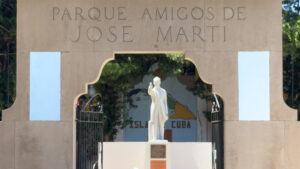
José Martí’s connection to Tampa is one of the clearest examples. Martí visited Tampa and spoke to cigar workers, using the city as a key organizing ground for Cuban independence. Tampa was not watching history from a distance. Its immigrant communities were participating in it.
Immigration Created Tampa’s Civic Infrastructure
One of the most remarkable aspects of Tampa’s immigrant story is that newcomers built their own civic infrastructure.
Mutual aid societies such as Centro Asturiano, Centro Español, L’Unione Italiana, and others provided social support, health care, cultural programming, education, and community gathering spaces. Tampa Historical notes that Centro Asturiano, founded in 1902, served Spanish immigrants who came to Ybor City in search of a better life.
These organizations were more than clubs. They were early examples of immigrant-led institution building. They helped people navigate a new country while preserving ties to the old one. They created a model of civic participation that still echoes in Tampa today: community, culture, commerce, and international identity working together.
This same people-to-people spirit is central to Tampa Sister Cities’ own purpose, which includes fostering international understanding by working with citizens of sister cities around the world and within the Tampa community.
The Cigar Industry Was Also an International Economy
The cigar industry connected Tampa to Cuba, the Caribbean, Europe, and markets across the United States. Tobacco, labor, shipping, manufacturing, and finance all moved through international networks. Tampa’s economy was shaped by immigration, but also by the global circulation of goods, ideas, and political movements.
This is important because Tampa’s international presence was never only cultural. It was economic from the beginning.
Immigrants brought the knowledge and labor that powered a major export industry. They opened businesses that served workers and families. They created a local economy tied to international supply chains before the phrase “global economy” became common.
Today, when Tampa talks about trade, innovation, diplomacy, education, and sustainability, it is not inventing an international identity from scratch. It is building on a foundation laid by generations of immigrants who made Tampa outward-looking from its earliest period of modern growth.
Food as a Record of Immigration
Tampa’s food culture is one of the most visible reminders of this history.
The Cuban sandwich, deviled crab, café con leche, Spanish bean soup, Italian dishes, and the long legacy of restaurants such as the Columbia are not simply local favorites. They are edible archives of migration, labor, adaptation, and cultural exchange.
Tampa’s cuisine reflects the communities that built the city: Cuban, Spanish, Italian, Jewish, Afro-Caribbean, and later waves of Colombian, Puerto Rican, Vietnamese, and other influences. Bon Appétit has noted how Tampa’s food culture grew from the early cigar industry’s mix of Cuban, Italian, and Spanish communities and later incorporated additional influences over time.
This matters because food is often one of the most durable forms of soft power. It tells a story people can taste. It turns immigration history into shared civic identity.
Tampa’s International Identity Is Not New
In recent years, Tampa has increasingly described itself as a global city. That is true, but it is not new.
Tampa’s international identity predates many of the institutions now associated with global engagement. It predates modern economic development language. It predates international business branding. It even predates Miami’s rise as Florida’s dominant global gateway.
Tampa became international because immigrants made it international.
They brought the world to Tampa and connected Tampa back to the world. They created industries, neighborhoods, political networks, cultural institutions, and civic traditions that gave the city a global character long before globalization became a strategy.
Why This History Matters Now
Tampa’s future as an international city depends on understanding the source of its international strength. It was never only geography, although the port and proximity to the Caribbean mattered. It was never only infrastructure, although railroads, shipping, aviation, and modern logistics have all played major roles.
At its core, Tampa’s global identity has always been human.
It came from people willing to cross borders, build community, share culture, start businesses, organize for causes, and create institutions that lasted beyond one generation. That history offers a powerful lesson for Tampa today.
International presence is not built only by signing agreements or hosting delegations. It is built by relationships. It is built by welcoming people. It is built by creating spaces where culture, commerce, education, and civic life intersect.
That is the story Tampa inherited from its immigrant communities.
And it is the story Tampa has the opportunity to carry forward.
-

-

-
 September 21, 2026