
When most people think about diplomacy, they imagine embassies, ambassadors, treaties, summits, and heads of state. They picture negotiations happening behind closed doors in capital cities like Washington, London, Brussels, Beijing, or Moscow.
That version of diplomacy still matters. National governments will always play the central role in matters of war and peace, security, trade policy, immigration, treaties, and alliances.
But diplomacy is no longer limited to capitals.
Increasingly, diplomacy also happens in city halls, classrooms, ports, airports, universities, museums, hospitals, business roundtables, cultural festivals, and neighborhood gathering places. It happens when students travel abroad, when entrepreneurs meet international partners, when artists collaborate across borders, when universities create exchange programs, and when local leaders welcome delegations from other countries.
In other words, diplomacy is becoming more local.
And that may be exactly what the world needs.
The Limits of National Diplomacy
National diplomacy is essential, but it is also constrained.
Governments must deal with competing national interests, security threats, partisan politics, economic pressures, and shifting administrations. A change in leadership can quickly change the tone of a country’s foreign policy. Longstanding partnerships can become strained. Public trust can erode. Global relationships can become more transactional.
In today’s world, we are seeing renewed emphasis on hard power: military strength, tariffs, sanctions, border control, resource competition, and strategic rivalry. These tools may be necessary in certain circumstances, but they cannot do everything.
Hard power can deter. It can punish. It can compel.
But it cannot, by itself, create trust.
It cannot make people admire your culture, study at your universities, visit your city, invest in your businesses, collaborate with your scientists, or build lasting friendships with your citizens.
That is where cities come in.
Cities Make Diplomacy Human
Cities are where international issues become personal.
Trade is not just a national statistic. It is a port, a warehouse, a small business, a manufacturer, a logistics company, or a family-owned restaurant sourcing ingredients from abroad.
Immigration is not just a policy debate. It is a neighbor, a student, a business owner, a doctor, a teacher, or a community leader.
Climate resilience is not just an international agreement. It is a flooded street, a seawall, a stormwater system, a coastal neighborhood, or a city planning department trying to protect residents.
Education exchange is not just a diplomatic program. It is a young person seeing the world differently because they studied, hosted, traveled, or formed a friendship across borders.
Culture is not just performance. It is food, music, language, faith, memory, migration, identity, and belonging.
Cities make global relationships tangible. They turn abstract foreign policy into human experience.
Local Diplomacy Can Continue When National Politics Shift
One of the great strengths of city-to-city diplomacy is that it can outlast political cycles.
Presidents, prime ministers, governors, and mayors change. Foreign policy priorities shift. National moods rise and fall. But relationships between communities can continue.
A city partnership that begins with a cultural exchange may later grow into a student program. A student program may lead to a university agreement. A university agreement may lead to a research collaboration. A research collaboration may lead to business opportunities. A business delegation may lead to investment, tourism, or workforce development.
These relationships build over time.
That is why local diplomacy is not ceremonial. It is relationship infrastructure.
It creates networks that may not make headlines today but can become invaluable tomorrow. When a crisis occurs, when a delegation needs to be organized, when a trade opportunity appears, or when a community needs a trusted partner abroad, those existing relationships matter.
The most durable diplomacy often begins before anyone urgently needs anything.
Sister Cities as a Model for Local Diplomacy
Sister Cities programs are one of the clearest examples of city-based soft power.
At their best, Sister City relationships are not simply symbolic agreements or occasional receptions. They are platforms for sustained international cooperation. They connect local residents, civic leaders, educators, artists, businesses, nonprofit organizations, and public institutions with counterparts around the world.
A Sister City relationship can support:
- student and youth exchanges
- cultural events and performances
- business delegations
- university partnerships
- municipal knowledge sharing
- tourism promotion
- humanitarian cooperation
- professional exchanges
- diaspora engagement
- international festivals and public programs
This kind of diplomacy is powerful because it is participatory. It allows ordinary citizens to become part of international relations.
Not everyone can serve in an embassy. Not everyone can negotiate a treaty. But many people can host a visitor, attend a cultural event, join a delegation, support an exchange student, speak on a panel, sponsor a program, or build a professional relationship with someone in another country.
Sister Cities democratizes diplomacy.
It reminds us that international understanding is not only the work of foreign ministries. It is also the work of communities.
Cities Have Their Own Global Interests
Cities are not passive players in the international system. They have their own global interests.
A city may want to attract foreign investment, expand tourism, support exports, recruit international students, build innovation partnerships, prepare for climate risks, strengthen cultural identity, or serve immigrant and diaspora communities.
These priorities are not separate from diplomacy. They are diplomacy.
A port city has international relationships because goods move through it. A university city has international relationships because students and researchers move through it. A tourism city has international relationships because visitors shape its economy. A diverse city has international relationships because its residents carry connections to the world.
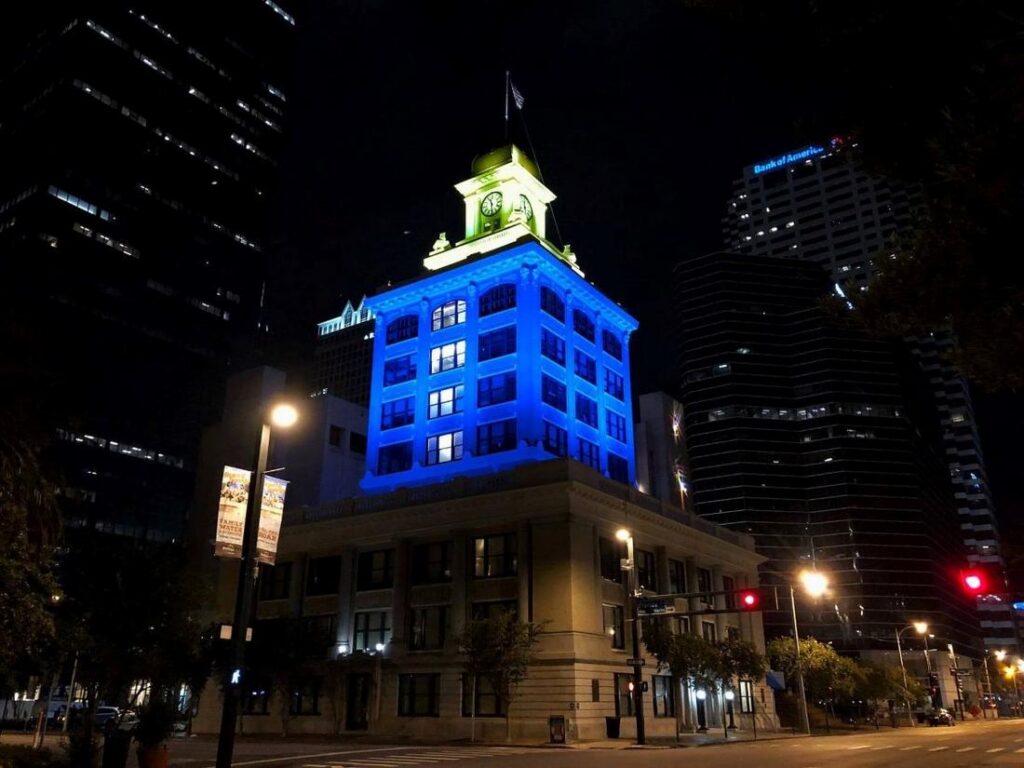
For a city like Tampa, this is especially true.
Tampa has long been shaped by water, trade, migration, culture, entrepreneurship, and international connection. Its identity is not isolated from the world. It has been formed through global movement: people, goods, ideas, food, music, language, and opportunity.
That means Tampa’s international relationships are not decorative. They are part of the city’s story and part of its future.
Soft Power Starts Close to Home
Soft power is often discussed at the national level. We talk about America’s universities, culture, innovation, values, brands, and institutions. But cities are where many people actually experience those things.
A visiting student does not experience “America” in the abstract. They experience a campus, a host family, a neighborhood, a city bus, a workplace, a restaurant, a museum, a classroom, or a friendship.
A foreign entrepreneur does not experience “the U.S. economy” in the abstract. They experience a chamber of commerce, a startup incubator, a port tour, a business meeting, a local attorney, a banker, or a potential partner.
A cultural delegation does not experience “American society” in the abstract. They experience a local audience, a performance space, a shared meal, and conversations with residents.
That is why cities are so important to soft power. They are where impressions are formed.
If a city is welcoming, organized, curious, and globally minded, visitors remember that. If local institutions are accessible and collaborative, partnerships grow. If residents are engaged, international relationships become real.
Soft power does not live only in speeches. It lives in experience.
The Future Is Not Either National or Local
None of this means cities replace national diplomacy. They do not.
National governments remain essential. They set foreign policy. They manage security. They negotiate treaties. They fund major programs. They represent countries in formal international institutions.
But city diplomacy complements national diplomacy.
It creates depth beneath official relationships. It builds people-to-people trust. It keeps channels open when politics become strained. It helps communities understand the world and helps the world understand communities.
In an era of polarization and global competition, this matters.
When national leaders disagree, cities can still talk.
When governments change direction, universities can still collaborate.
When international tensions rise, cultural relationships can still remind people of shared humanity.
When official diplomacy becomes transactional, local diplomacy can remain relational.
A Call for More Intentional City Diplomacy
For cities to fulfill this role, local diplomacy must be intentional.
It is not enough to have names on a list, plaques on a wall, or agreements in a file. Cities need active international strategies that connect civic pride with practical outcomes.
That means asking better questions:
- Which international relationships align with our city’s economic future?
- Where do our universities already have global ties?
- Which diaspora communities can help build bridges?
- How can our cultural institutions participate?
- How can local businesses benefit from international exchange?
- How can students and young professionals be included?
- How can Sister City relationships support trade, education, sustainability, innovation, and tourism?
- How do we measure success beyond attendance and photographs?
The future of city diplomacy belongs to communities that can connect symbolism with substance.
Conclusion: When Capitals Are Divided, Cities Can Still Build Bridges
The world is becoming more complex, more competitive, and in many ways more divided. Hard power is back at the center of global affairs. National governments are under pressure to act more forcefully, more defensively, and more transactionally.
But that does not make soft power less relevant.
It makes it more necessary.
Cities are uniquely positioned to practice the kind of diplomacy the world still needs: practical, personal, local, relational, and human.
They can build trust before a crisis. They can connect people before politics divide them. They can create opportunities that national governments may never see. They can turn international friendship into local action.
Foreign policy may be led by nations, but the future of diplomacy will increasingly be shaped by cities.
Because when capitals are divided, cities can still build bridges.
-
 September 21, 2026
 -
 September 21, 2026
 -
 September 21, 2026